Fibroids can range from small sizes that are not visible to the human eye to large masses that deform the uterus. Fibroid treatment can be done either non-surgically or through surgery.
What is a Fibroid?
Fibroids (uterine fibroids, growths) are noncancerous, benign growths of the uterus that typically occur during the reproductive years. Leiomyomas or uterine fibroids are not associated with an increased risk of uterine cancer. However, in some cases, fibroids may need to be removed. Fibroid surgery involves the surgical removal of these growths from the uterus.
Fibroids can range from undetectable, tiny sizes to bulky masses that distort the uterus and grow significantly large. They can appear as a single fibroid or multiple ones. Large and numerous fibroids may extend beyond the uterus, reaching the upper abdomen and creating a noticeable mass effect.
Sometimes women may have uterine fibroids without knowing it, as most fibroids do not cause symptoms. A doctor may incidentally discover fibroids during a pelvic examination or prenatal ultrasound before a fibroid surgery consultation in Antalya.
Fibroid Symptoms
Most women with fibroids do not experience any symptoms. Symptoms depend on the location, size, and number of fibroids. The most common signs and symptoms of uterine fibroids include:
- Heavy menstrual bleeding,
- Periods lasting more than a week,
- Pelvic pressure or pain,
- Frequent urination,
- Difficulty emptying the bladder,
- Constipation,
- Back pain or leg pain.
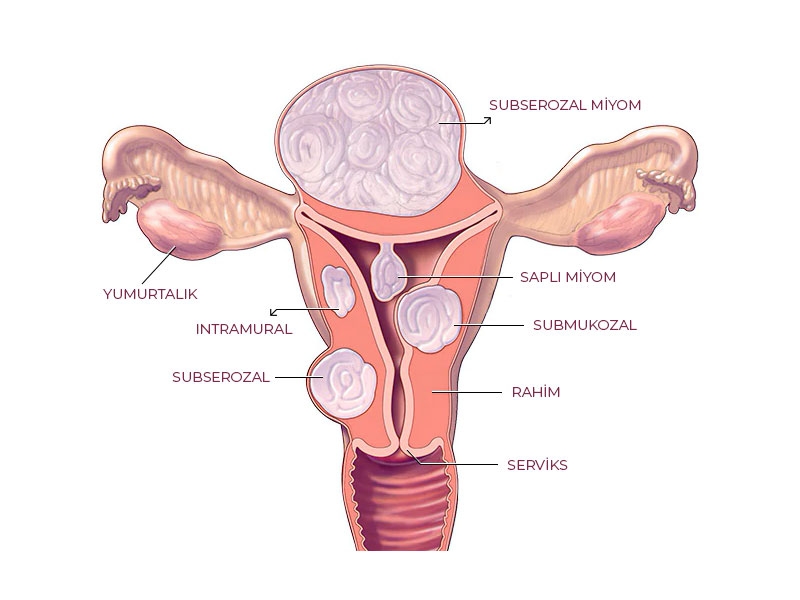
Fibroids rarely cause acute abdominal pain due to insufficient blood flow to sustain their growth. Fibroids are typically classified based on their location:
- Intramural fibroids grow within the uterine wall.
- Submucosal fibroids develop under the uterine lining and grow into the uterine cavity.
- Subserosal fibroids extend outward from the uterus.
When Should I See a Doctor About Fibroids?
A woman diagnosed with uterine fibroids should consult a doctor if the following occur:
- Persistent pelvic pain,
- Heavy, prolonged, or painful menstrual periods,
- Spotting or bleeding between periods,
- Difficulty emptying the bladder,
- Unexplained anemia due to low red blood cell count.
In cases of severe vaginal bleeding or sudden, sharp pelvic pain, it is essential to seek immediate medical attention. For a uterine fibroid evaluation, you can request an appointment with Op. Dr. Funda Yazıcı Erol or call for more information.
What Causes Fibroids?
The exact cause of uterine fibroids is unknown, but research and clinical experience point to the following factors:
- Genetic Changes: Fibroids may contain genetic alterations that make them different from normal uterine muscle cells.
- Hormones: Estrogen and progesterone, which prepare the uterus for pregnancy during each menstrual cycle, seem to promote fibroid growth. Fibroids contain hormone receptors and tend to shrink after menopause due to decreased hormone production.
- Other Growth Factors: Substances that help the body maintain tissues, such as insulin-like growth factors, may also affect fibroid growth.
- Extracellular Matrix (ECM): ECM acts like mortar between bricks, helping cells adhere to one another. ECM increases in fibroids, making them fibrous. It also stores growth factors and causes biological changes in the cells.
Doctors believe uterine fibroids originate from a stem cell in the smooth muscle tissue of the uterus (myometrium). They may form firm or rubbery masses of different natures. Uterine fibroids exhibit variable growth patterns; they can grow slowly, rapidly, or remain the same size. Some fibroids shrink spontaneously, especially after pregnancy, as the uterus returns to its normal size.
Risk Factors for Fibroids
Several risk factors are known to influence fibroid development:
- Race: While fibroids can develop in any woman of reproductive age, they are more common in Black women. Additionally, Black women tend to develop fibroids at younger ages, have larger and more numerous fibroids, and experience more severe symptoms.
- Heredity: If your mother or sister has fibroids, your risk of developing them increases.
- Other Factors: Early onset of menstruation, obesity, vitamin D deficiency, a diet high in red meat and low in green vegetables, fruits, and dairy, and alcohol consumption (including beer) may increase the risk of fibroids.
Complications of Fibroids
While uterine fibroids are usually not dangerous, they can sometimes cause discomfort. Fibroid-related bleeding may lead to fatigue, a decrease in red blood cell levels, and anemia due to heavy blood loss. In rare cases, a blood transfusion may be required.
Only a small percentage of uterine fibroids require treatment. Treatment plans for fibroids consider factors such as the individual's age, desire for children, the location, number, and size of the fibroids.
Maintaining a healthy weight, consuming a balanced diet rich in fruits and vegetables, and making healthy lifestyle choices can help reduce the risk of developing fibroids.
Fibroids During Pregnancy
Fibroids typically do not prevent pregnancy. However, submucosal fibroids can cause infertility and recurrent pregnancy loss. During pregnancy, fibroids may increase the risk of complications such as placental abruption, fetal growth restriction, and preterm birth.
Fibroid Diagnosis
- Ultrasound: Ultrasound is a readily available diagnostic tool for fibroids. By using sound waves to create images, it easily detects fibroids. It can be performed as an abdominal or transvaginal ultrasound.
- Magnetic Resonance Imaging (MRI): MRI provides detailed evaluations of uterine anatomy, fibroid location, number, and size. It is particularly useful for women with an enlarged uterus or those nearing menopause. MRI can also identify other types of tumors.
- Sonohysterography: In this method, a sterile saline solution is injected into the uterine cavity, expanding it to allow better visualization of fibroids protruding into the cavity via ultrasound. It is helpful for diagnosing causes of infertility, recurrent miscarriages, or unexplained bleeding.
- Hysterosalpingography: This involves using a contrast dye under X-ray to visualize the uterine cavity and fallopian tubes dynamically. It is often employed to investigate tubal status or detect issues such as uterine septa or fibroids extending into the cavity.
- Hysteroscopy: Hysteroscopy uses a small, lighted camera similar to a telescope. Sterile saline is injected to expand the uterine cavity, allowing direct visualization of the inside of the uterus and tubal openings. Submucosal fibroids can be identified using this method.
Fibroid Treatment in Antalya
Uterine fibroids are benign growths. Most fibroids are asymptomatic and do not require treatment. Treatment decisions depend on the number, size, location, symptoms, and complications caused by the fibroids. Patient age and fertility status are also considered when planning treatment.
Fibroids without symptoms are usually monitored with regular evaluations. These assessments, typically performed every 3-6 months, focus on uterine and fibroid size to detect any rapid growth. Rapid size increase raises concerns about potential sarcomatous transformation, necessitating surgery.
Common indications for fibroid treatment in Antalya include:
- Symptoms caused by fibroids (bleeding, pain, pressure symptoms),
- Postmenopausal growth of fibroids,
- Recurrent miscarriages or infertility,
- Fibroids larger than 10 cm due to sarcoma risk,
- Torsion or necrosis in pedunculated fibroids,
- Rapid fibroid growth,
- Submucosal fibroids extending into the vagina,
- Fibroids causing iron deficiency anemia,
- Persistent bleeding despite treatment,
- Degenerated fibroids presenting with acute abdominal symptoms.
Fibroid treatment options include medical and surgical approaches.
Medical Fibroid Treatment
Medical therapy aims to temporarily relieve symptoms and shrink fibroid size using various hormones and hormone analogs. However, fibroids typically return to their original size within approximately three months after discontinuing treatment. Some hormone analogs are used preoperatively to reduce fibroid size and bleeding.
When Is Fibroid Surgery Necessary?
In Antalya, fibroid surgery involves either removing the fibroids or the uterus. For younger patients, those planning pregnancy, or those wishing to preserve the uterus, a myomectomy is preferred. Uterus removal (hysterectomy) is considered in the following cases:
- Persistent bleeding despite treatment,
- Severe pressure symptoms,
- Fibroids larger than 10 cm,
- Numerous fibroids in the uterus,
- No desire for future pregnancies,
- Premenopausal or postmenopausal status,
- Rapid fibroid growth.
Minimally Invasive Fibroid Treatments in Antalya
- Uterine Artery Embolization: Small embolizing agents are injected into the arteries supplying the uterus to cut off blood flow to the fibroids, causing them to shrink. Symptoms associated with fibroids are reduced or alleviated.
- Radiofrequency Ablation: Fibroids are heated and destroyed using energy from radiofrequency waves, delivered via special needles inserted into the fibroids under laparoscopic and ultrasound guidance.
- Laparoscopic or Robotic Myomectomy: For small and fewer fibroids, minimally invasive laparoscopic or robotic surgery can remove them through a small abdominal incision. Robotic surgery provides enhanced precision, flexibility, and control with a 3D magnified view.
- Hysteroscopic Myomectomy (Removal from Below): This technique is used for fibroids beneath the uterine lining. A hysteroscope inserted into the uterus allows the surgeon to visualize and remove the fibroid.
- Endometrial Ablation: Submucosal fibroids can be treated by ablating the uterine lining using heat, microwaves, hot water, or electric current. This method aims to stop vaginal bleeding caused by fibroids. Pregnancy is not possible after endometrial ablation, so contraception is recommended to prevent ectopic pregnancies.
 Funda Yazıcı Erol MDGynecology and ObstetricsContact

 What Are the Types of Fibroid Surgeries?

 Funda Yazıcı Erol MDGynecology and Obstetrics